Google Introduces Multiturn Ads for Follow-Up Queries in AI Mode
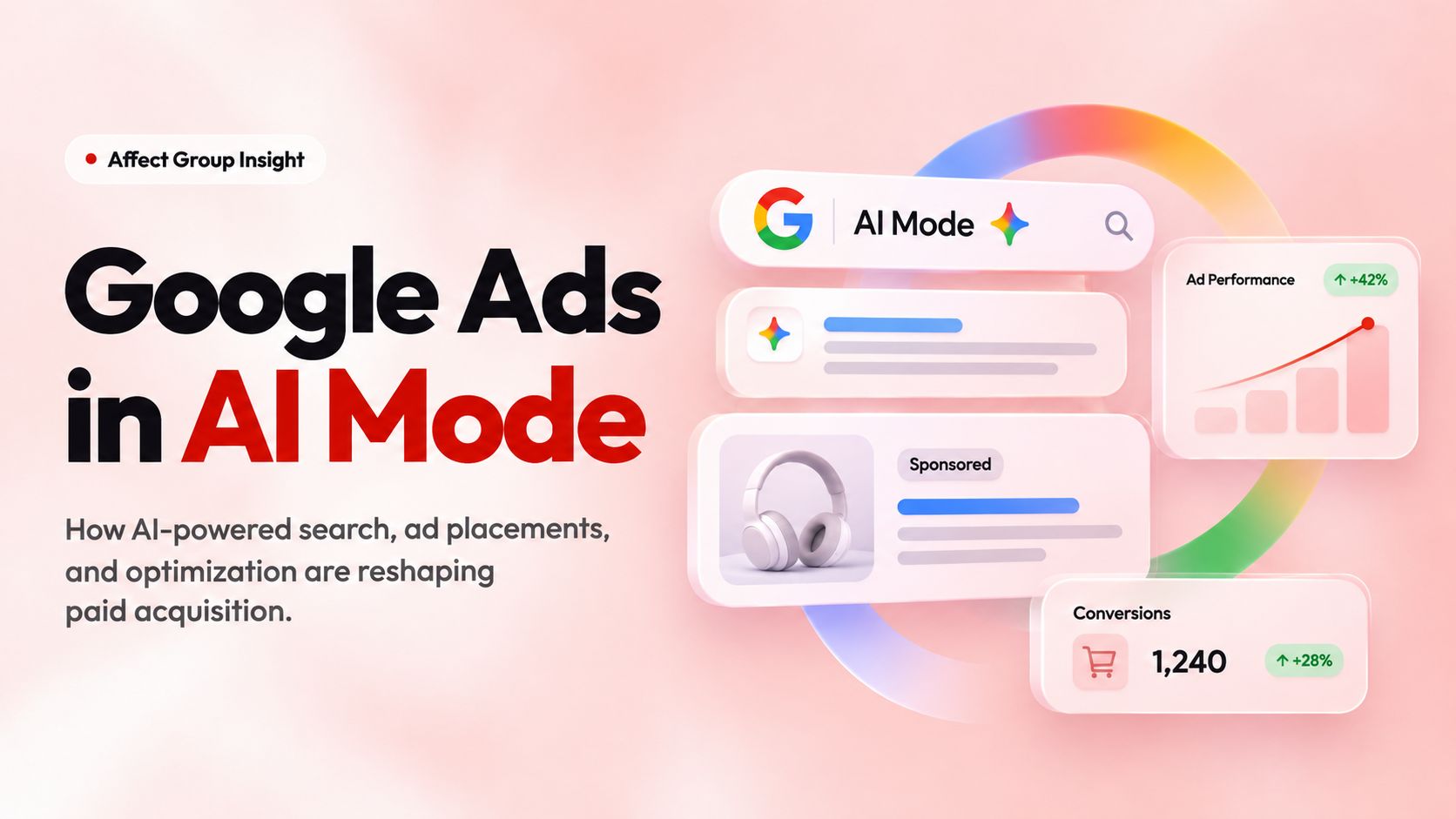
On October 28, 2026, Google announced the launch of Multiturn Ads, a new mechanism for showing ads in responses to users' follow-up questions in Google AI Mode.
Previously, ads in AI Mode could appear for the initial query. Now Google is extending advertising opportunities to later stages of the conversation, when the user clarifies product specifications, compares offers, or chooses a service provider.
Multiturn Ads have launched in the U.S. There is no need to create a separate ad campaign: Google uses existing Search, Shopping, and Performance Max campaigns.
How Multiturn Ads Work in Google AI Mode
The main change is that Google can determine the user's commercial intent not only from the initial query but also from the context of the subsequent conversation.
For example, a user asks which laptop is best for graphics work. AI Mode compares suitable models, processors, and graphics cards.
The user then asks which laptops with 32 GB RAM can be bought for less than $1,500. At this stage, Google can show Sponsored Ads with suitable products from ad campaigns.
In this way, the advertiser gets the opportunity to show ads at later stages of the selection process, when the shopper has already formulated specific requirements.
Google notes that queries in AI Mode are on average three times longer than traditional search queries. This creates additional opportunities to match ads with the detailed context of the user's task.
Which Ad Campaigns Participate in Multiturn Ads
Google confirmed that existing ad campaigns can participate in AI Mode auctions if they meet the requirements.
Search, Standard Shopping, and Performance Max are used for this. However, the ad matching options depend on the campaign type and targeting settings.
| Campaign or targeting type | Direct Query Matching | Contextual Matching |
|---|---|---|
| Search: Exact Match | Yes | No |
| Search: Phrase Match | Yes | No |
| Search: Broad Match | Yes | Yes |
| Search with AI Max and Search Term Matching | Yes | Yes |
| Standard Shopping | Yes | Yes |
| Performance Max | Yes | Yes |
Direct Query Matching is used when the user directly searches for a product or service. For example, buy a laptop with 32GB RAM.
Contextual Matching takes into account the user's query and the content of the AI Mode response. For example, a user asks how to choose a laptop for video editing, and Google explains the memory and processor requirements. Relevant ads may appear in such a response.
Exact and Phrase Match can participate in the first scenario, while Broad Match, AI Max, Shopping, and Performance Max can participate in both.
What to Set Up in Google Ads to Participate in Multiturn Ads
Google does not provide a separate Enable Multiturn Ads toggle. Advertisers need to work with existing campaign settings.
The main areas of optimization include Search Term Matching, Smart Bidding, ad assets, landing pages, and Merchant Center product data.
AI Max and Broad Match Expand Contextual Matching Options
If a Search campaign uses only Exact and Phrase Match, ads can participate in AI Mode for direct commercial queries but not in contextual matching for broader research questions.
To expand the available scenarios, Google recommends using:
- AI Max for Search with Search Term Matching active.
- Broad Match for relevant keywords.
- Negative Keywords and Brand Exclusions to limit unwanted traffic.
This does not mean that all Search campaigns need to be switched to Broad Match. The decision should depend on conversion quality, the advertiser's goals, and acceptable reach.
Smart Bidding and Accurate Conversions Determine Performance
Google recommends using bidding strategies focused on conversions or their value:
- Maximize Conversions and Target CPA.
- Maximize Conversion Value and Target ROAS.
Online stores need to pass purchases and their value. B2B and service companies need to pass leads, qualified leads, and, if there is a CRM integration, subsequent deals.
Data can be passed through the Google Tag and Offline Conversion Imports.
There is no separate bidding strategy for Multiturn Ads. Google uses existing Smart Bidding strategies.
Ads and Landing Pages Should Answer Specific Queries
In AI Mode, Google can take into account the context of the question, the content of the AI response, and information on the advertiser's website.
For Search and Performance Max, Google recommends using the available Text Customization and Final URL Expansion features to adapt ads and landing pages to different user intents.
For example, a B2B SaaS company can prepare separate pages describing the product's functionality, integrations, pricing, and use cases.
When a user discusses integrating a CRM with a specific system in AI Mode, Google can potentially select a specialized page rather than the company's general homepage.
Google is also testing AI Explainers, automatically generated explanations of why an ad offer matches the user's query.
The advertiser cannot edit or approve the text of these explanations. Therefore, the relevance and accuracy of the information on the website become even more important.
Merchant Center Helps Match Products to Follow-Up Questions
For online stores, Google recommends maintaining high-quality, detailed product data.
The following are especially important:
- Product Titles and Descriptions: accurate specifications, sizes, materials, compatibility, and product features.
- Product Images: high-quality images of products and how they are used.
- Price and Sale Price: up-to-date prices and discounts.
- Product Ratings: available customer ratings and reviews.
- Shipping and Returns: correct shipping and return terms.
- Landing Page Consistency: consistency between the data in the product feed and the information on the website.
For example, a user can specify that they need waterproof running shoes in a certain size. Detailed product specifications help Google determine whether a product matches the query.
At the same time, feed optimization does not guarantee impressions in Multiturn Ads. The advertiser still participates in the ad auction.
What Limitations Multiturn Ads Have for Advertisers
Multiturn Ads are not a standalone campaign type or a separate placement with its own budget.
| Capability | Availability |
|---|---|
| Separate Multiturn Ads Campaign | No |
| Dedicated budget for AI Mode | No |
| Targeting AI Mode exclusively | No |
| Separate opt-out of AI Mode | No |
| Negative Keywords and Brand Exclusions | Yes |
| Separate bids for Multiturn Ads | No |
| Standard payment model | Yes |
| Full separate report for Multiturn Ads | Not provided |
Google does not provide a separate toggle for opting in to or out of AI Mode. Standard campaign settings and restrictions are used.
At launch, full separate reporting that would make it possible to reliably isolate all impressions, clicks, and conversions specifically from AI Mode follow-up questions was also not introduced.
Standard campaign metrics continue to include the results of such impressions, but calculating ROAS for Multiturn Ads separately is difficult for now.
Multiturn Ads Geography and Availability
At launch in October 2026, Multiturn Ads are available in the U.S.
At the same time, Google expanded regular AI Mode ad placements to ten additional markets:
Australia, Canada, India, Kenya, Malaysia, New Zealand, Nigeria, Pakistan, the Philippines, and Singapore.
However, the expansion of regular AI Mode ad placements does not mean that Multiturn Ads are already available in all of the listed countries.
For the mechanism of placing ads after follow-up questions, Google separately confirmed the launch in the U.S.
What the Launch of Multiturn Ads Means for Advertisers
The main change is the extension of Google AI Mode advertising opportunities to later stages of the user's conversation.
To participate, advertisers do not need to create separate campaigns, install an additional tag, or connect a new advertising product.
However, the settings of existing campaigns affect the available ad matching scenarios.
For Search, AI Max, Broad Match, and the quality of conversion data become especially important. For Shopping and Performance Max, what matters is up-to-date Merchant Center product feeds, product specifications, and how well landing pages match user queries.
In B2B and service categories, specialized pages that describe product capabilities, integrations, prices, and specific use cases play an additional role.
Multiturn Ads expand potential ad reach inside AI Mode but do not guarantee impressions in every conversation. Performance still depends on ad relevance, the campaign's eligibility to participate in the auction, the bidding strategy, and the quality of the conversions passed.
Trust Us Transform Your Performance Marketing.
Make Google Ads in AI Mode part of your performance strategy with stronger campaign signals, landing pages, and conversion measurement.
Discuss Your Google Ads StrategySources
Related articles
Constant Contact and CallRail Launch Native Integration for Lead Attribution
Cordial Launches Headless CDP for AI-Powered Customer Data Analysis

VTEX Expands Shopping Assistant for AI Product Discovery and Order Tracking
Agorapulse Launches MCP Integration for Claude, ChatGPT, and Copilot Studio
TikTok Introduces Shopping Assistant and Buy Direct One-Click Checkout
Meta Expands Direct Checkout Across Business Agent, Meta AI, and Muse
Google Merchant Center Introduces UCP Integration Hub for Agentic Checkout
BigCommerce and Cloudflare Launch WebMCP for AI Shopping Agents
Microsoft Advertising Expands Performance Max Controls, Reporting, and AI Campaign Tools