
Google Ads 2025 Update: Devices Settings in Performance Max
Performance Max (PMAX) campaigns combine Google’s Search and Display inventory — including YouTube, Gmail, Discover, and the Display Network — to deliver automated, action-optimized performance. Designed to maximize conversions, PMAX campaigns use machine learning to serve ads across multiple channels based on user intent and behavior. However, despite their automation benefits, advertisers have long lacked control over key settings — particularly device-level targeting.
Until 2025, advertisers couldn’t adjust bids or exclude specific device types — making PMAX suboptimal for certain industries.
One of the most common limitations of PMAX has been the inability to manage mobile traffic effectively. In categories such as B2B services or high-consideration products, where desktop conversions typically outperform mobile, advertisers often found mobile traffic to be inefficient or even detrimental to ROI. Yet PMAX campaigns would automatically allocate 80–90% of impressions to mobile devices, with no option to exclude or deprioritize this segment.
What’s New: Device Targeting Is Rolling Out
Google is now gradually rolling out device-level targeting controls within PMAX campaigns. Advertisers can finally choose which devices their ads appear on. The supported device types include:
-
Computers
-
Mobile phones
-
Tablets
-
TV screens
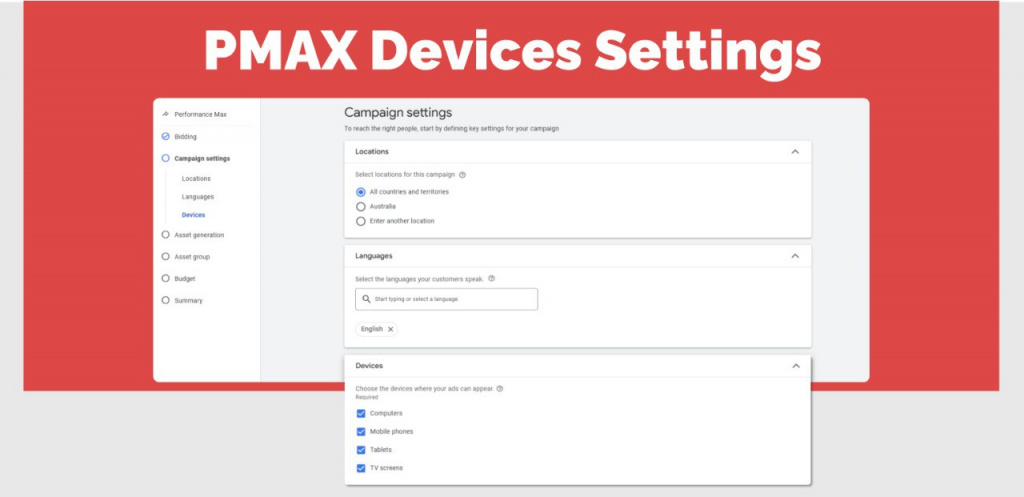
This long-awaited update finally puts more strategic control back into the hands of advertisers. By allowing device-level targeting, Performance Max becomes a more viable and efficient option for industries with distinct user behavior across devices — from B2B to luxury retail and beyond. You can now minimize wasted spend on underperforming traffic, fine-tune delivery based on where your conversions happen, and drive better ROI from your automation-driven campaigns.
For brands that previously avoided PMAX due to mobile-heavy delivery, this change opens new doors for scaling campaigns with precision — without sacrificing efficiency.
Explore more:
Take Control of Your Google Display Placements
Performance Max Placements Explained: Where Your Ads Show in 2025